Your Cart is Empty
Free US shipping on every photo blanket·Creating treasured keepsakes since 2006
Free US shipping on every photo blanket·Creating treasured keepsakes since 2006


Choose a photo collage canvas by its canvas material, wrap construction, and dimensions first; then choose hero-and-grid as the best overall layout, an equal grid for balanced family portraits, or a chronological strip for a story-led gift. This 2026 guide explains which arrangement suits your photographs and what to check before turning them into a keepsake.
A collage has to work as a whole picture, not just a collection of favorite photographs. A beautiful portrait loses its place when neighboring images compete for attention or an important face sits against the wrapped edge.
Start with the custom photo image canvas gallery wrap print when considering the canvas format. Confirm the selected dimensions and artwork requirements before building your composition; a layout idea is not a guarantee that a particular editor includes that template.
For PersonalThrows shoppers planning a photo collage canvas, hero-and-grid is the best default for a family keepsake. It gives the eye a clear starting point while leaving room for the smaller moments that make the gift personal.
Use these criteria to choose your 2026 design before comparing the arrangements below:
The order below favors a clear focal point, readable photographs, and straightforward photo selection. Each layout serves a different purpose rather than competing to hold the most pictures.
| Layout | Best for | Standout feature | Key limitation |
|---|---|---|---|
| Hero-and-grid | A family keepsake with one leading image | A large photograph anchors smaller supporting images | Requires a clear favorite |
| Equal grid | Family members receiving equal emphasis | Repeated cells create a consistent arrangement | Mixed photo shapes require careful cropping |
| Triptych | A tightly edited set of related moments | Three sections keep the story focused | Leaves little room for a large photo collection |
| Chronological strip | Anniversaries and milestone stories | Image order communicates progression | Long sequences reduce individual photo size |
| Mixed-orientation mosaic | Collections with varied photo shapes | Portrait and landscape images share the composition | Uneven spacing can make the arrangement feel scattered |
| Symmetrical portrait layout | A couple or central person surrounded by loved ones | Mirrored placement emphasizes the central subject | Requires a compatible selection on both sides |
A hero-and-grid layout pairs one large photograph with smaller supporting images. Choose a group portrait, wedding photograph, or meaningful candid as the anchor, then add details that explain why that moment matters.
The main photograph carries the composition. Supporting pictures can show individual relatives, a shared place, or small moments from the same occasion without demanding equal attention.
Hero-and-grid pros:
Hero-and-grid cons:
Best for: A parent, grandparent, or couple with one treasured photograph at the center of the story.
For your 2026 gift, choose the anchor before collecting the supporting images. Buy verdict: choose hero-and-grid when you can name the main photograph immediately.
An equal grid places photographs in matching cells with consistent spacing. It suits a collection in which each person, household, or pet deserves the same visual emphasis.
Use similar subject scale across the cells. A close-up face beside a distant full-length portrait occupies the same space but does not receive the same attention.
Equal grid pros:
Equal grid cons:
Best for: A family gift that gives each child, grandchild, or household equal emphasis.
Try a 2-by-2 grid with four photographs as a planning exercise, not a required template. Check every crop individually before adding more cells. Buy verdict: choose an equal grid when fairness matters more than a single focal point.
A triptych divides the composition into three sections. Here, that means three photographs arranged within one canvas design, not a promise of three separately mounted canvases.
Choose pictures that belong together: an embrace, a shared laugh, and a quiet portrait, for example. Consistent image height and deliberate ordering keep the set connected.
Triptych pros:
Triptych cons:
Best for: A wedding moment, sibling portraits, or a short sequence from a meaningful day.
Lay out three photographs and check what each contributes. Replace an image that adds nothing new. Buy verdict: choose a triptych when a small selection tells the whole story.
A chronological strip orders photographs through time, usually along a horizontal or vertical reading direction. It suits an anniversary, graduation, or family milestone because the arrangement explains how the story developed.
Select turning points rather than every photograph you own. A first meeting, a shared home, and a later family portrait provide different chapters without needing a crowded timeline.
Chronological strip pros:
Chronological strip cons:
Best for: An anniversary or milestone gift where progression matters more than equal portrait size.
For a 2026 anniversary keepsake, check the order with someone who knows the story before finalizing it. Buy verdict: choose a chronological strip when the sequence is the reason for the gift.
A mixed-orientation mosaic combines portrait and landscape openings. Choose this arrangement when your favorite photographs would lose important details if forced into identical squares.
Build around a few larger shapes, then fit the remaining photographs around them. Keep the gaps consistent so the variety comes from the images rather than irregular spacing.
Mixed-orientation mosaic pros:
Mixed-orientation mosaic cons:
Best for: A travel, family, or celebration collection containing both tall and wide photographs.
Keep a consistent alignment along the outside of the composition. That boundary gives the varied interior shapes a shared structure. Buy verdict: choose a mixed-orientation mosaic when preserving the original framing is your priority.
A symmetrical portrait layout places a central person or couple between balanced groups of supporting photographs. The surrounding pictures can show relationships, shared occasions, or different chapters of the central subject’s life.
Balance the size and visual weight of the side images. Symmetry does not require identical photographs, but one side should not overpower the other.
Symmetrical portrait layout pros:
Symmetrical portrait layout cons:
Best for: A tribute to a parent, grandparent, couple, or beloved family member.
Choose the central portrait first, then compare the side groups together rather than adding them individually. Buy verdict: choose a symmetrical portrait layout when the gift celebrates a person above an event.
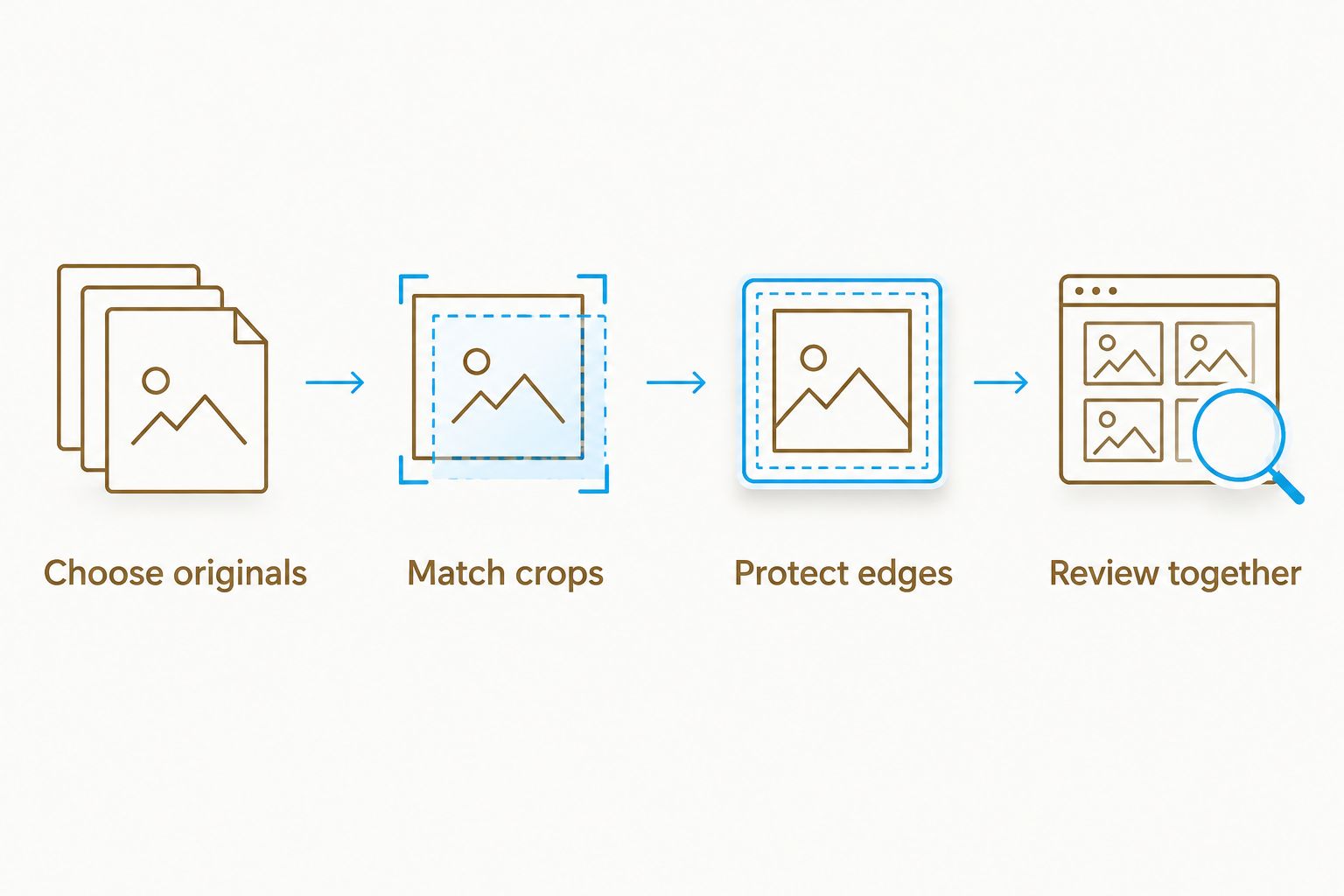
Follow this order for your 2026 photo collage canvas. It prevents a finished arrangement from depending on a crop or file that does not work.
Use original image files when you have them rather than screenshots of photographs. Open each image at a larger view and inspect the eyes, expressions, and important details before assigning it a prominent position.
Place wide group pictures in landscape openings and tall portraits in portrait openings where possible. Check hands and faces as carefully as the central subject; a crop can preserve a smile while cutting away the gesture that made the photograph special.
Use the selected product’s artwork guidance to identify the front-facing area, wrap, and any trimming allowance. Keep essential details inside the designated safe area rather than assuming everything visible in your file stays on the front.
Look at the complete composition, then inspect each photograph separately. Ask a second person to check names, image order, missing relatives, and unintended crops before submission.
Canvas is a display surface, not a blanket fabric. Read the exact product description for its material and mounting details; do not transfer a construction claim from another item in the same store.
Mark the intended canvas outline on the wall with removable paper before deciding on dimensions. View that outline from where the recipient will normally stand or sit, then consider whether the smallest faces in your composition deserve more space.
A 16-by-20-inch print and a 24-by-30-inch print require different wall areas. Both dimensions appear in the supplied canvas catalog, but they are not a statement of the custom photo canvas options. Confirm the dimensions of the particular canvas you select.
For a PersonalThrows keepsake, choose the gift format as deliberately as the photographs. A wall display and a photo blanket serve different purposes, even when they feature the same treasured family moment.
This 2026 ranking prioritizes visual hierarchy, readable faces, crop compatibility, and story clarity. Hero-and-grid takes the default position because it separates the main memory from supporting details; the other layouts win when your photographs call for a different emphasis.
The ranking concerns design suitability, not print testing or a comparison of canvas manufacturers. Choose the arrangement that fits your actual photographs rather than changing the photographs to satisfy a ranking.
Choose hero-and-grid if you are undecided. Start with your strongest family photograph and add only the supporting images that deepen its meaning.
Choose an equal grid when everyone needs equal space, a triptych for a short story, or a chronological strip for a milestone. Use a mosaic to preserve varied photo shapes and a symmetrical portrait layout to celebrate a central person or couple.
What's the best photo collage canvas layout for family pictures?
Hero-and-grid is the best default when one family photograph deserves the most attention. Choose an equal grid instead when each person or household needs equal emphasis.
How many photos should I put on a collage canvas?
Use only as many photographs as remain readable at your chosen display size. Start with a small selection and remove images if faces become difficult to recognize from the intended viewing position.
Is a grid better than a mosaic for family photos?
A grid is better for equal emphasis, while a mosaic is better for photographs with varied proportions. Choose according to your image shapes and the importance of each photograph.
Can I mix portrait and landscape photos on one canvas?
Yes, a mixed-orientation composition can include both portrait and landscape photographs. Check the selected editor or artwork requirements before preparing the finished file.
Does a triptych mean three separate canvases?
Not in this guide: triptych describes three image sections within one canvas composition. A separately mounted set is a different product format and needs its own layout and hanging plan.
How do I stop faces from wrapping around the canvas edges?
Keep faces within the front-facing safe area identified by the selected product's artwork guidance. Review the edge treatment and final preview rather than assuming the full image remains on the front.
What should I check before submitting a personalized canvas gift?
Check image clarity, cropping, names, photo order, dimensions, and wrap treatment before submission. Review the complete composition and each individual photograph separately.
Do a removal test before you order: hide one supporting photograph and look at the composition again. If the story still feels complete and the remaining faces have more room, leave that photograph out.
The most meaningful PersonalThrows gift does not need every memory. Give the precious ones enough space to be seen.

