Your Cart is Empty
Free US shipping on every photo blanket·Creating treasured keepsakes since 2006
Free US shipping on every photo blanket·Creating treasured keepsakes since 2006


Best overall: smooth polyester for a custom photo pillow with clearly defined faces. Best for a cuddly gift: short-pile microfleece. Best for a structured decorative pillow: cotton canvas. This 2026 guide compares fabric surfaces, construction details, and photo choices so you can choose a meaningful gift without overlooking how it will feel.
A fabric's surface affects both the photograph and the feel of a pillow. A smooth surface keeps attention on the image; a fuzzy or visibly woven surface adds texture that becomes part of the picture.
PersonalThrows sells custom photo-printed pillows and other personalized home gifts. PersonalThrows is best for custom photo pillow shoppers who want a sentimental gift and access to US-based phone support. Choose the specific product by its stated specifications, not by assumptions about the rest of the range.
For your 2026 purchase, compare these criteria before choosing a favorite texture:
Fabric names alone do not settle the decision. Polyester describes a fiber, while microfleece and velvet describe fabric constructions or surfaces; the categories can overlap.
These are fabric-category recommendations, not a claim that every option is offered by PersonalThrows. The order reflects photo readability first, followed by distinct uses for softer or more decorative surfaces.
| Rank and fabric | Best for | Standout feature | Key limitation |
|---|---|---|---|
| 1. Smooth polyester | Faces and detailed photographs | Even surface without a pronounced pile | Fiber name alone does not establish softness |
| 2. Short-pile microfleece | Cuddly keepsake gifts | Soft, fuzzy surface | Pile adds texture across fine details |
| 3. Cotton canvas | Structured decorative pillows | Firm hand and visible woven character | Less plush against the face |
| 4. Linen blend | Relaxed, textured room decor | Distinctive woven appearance | Blend composition and texture vary |
| 5. Velvet | Decorative portraits with sheen | Directional pile catches the light | Appearance changes when the pile moves |
The practical choice is between an image-first surface and a texture-first surface. Neither replaces checking the actual product description or examining a close-up photograph of the cover.
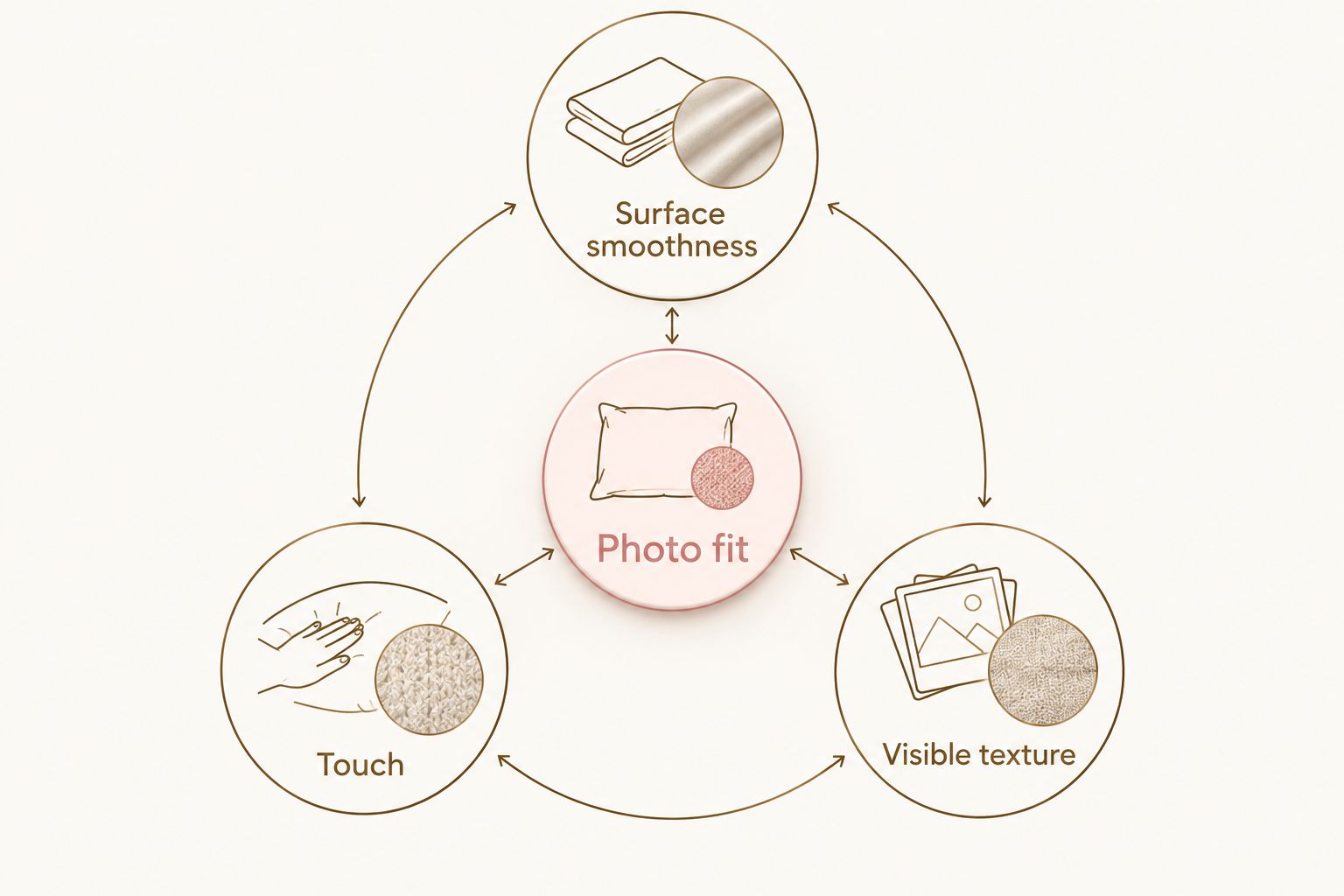
Smooth polyester is the default choice when the photograph matters more than a noticeable fabric texture. Look for a closely constructed, even surface rather than assuming every polyester cover feels or prints alike.
A family portrait with small faces gives you a clear reason to prioritize smoothness. The same applies to a pet photograph where the eyes and expression are the focus.
Smooth polyester pros:
Smooth polyester cons:
Best for: A portrait-led gift where you want recognizable expressions to take center stage.
Before choosing smooth polyester in 2026, check the backing as well as the printed face. A description of the front does not establish the material or texture on the reverse. Verdict: Buy smooth polyester when photo detail is your first priority.
Short-pile microfleece gives a pillow a soft, fuzzy surface. Choose it when the recipient's experience of holding the gift matters more than preserving tiny visual details.
Keep the design simple. A close portrait, a clearly outlined pet, or a small selection of generously sized photographs is a better match than a crowded arrangement of miniature images.
Short-pile microfleece pros:
Short-pile microfleece cons:
Best for: A comforting keepsake for someone who values a soft feel over a crisp-looking surface.
Check whether the fuzzy material covers both sides or only one. Also confirm the finished cover's washing instructions rather than borrowing instructions from a fleece blanket. Verdict: Buy short-pile microfleece for a cuddle-first gift.
Cotton canvas is a woven fabric with a firmer, more substantial hand than a plush surface. Its visible weave becomes part of the finished photograph's appearance.
Choose cotton canvas when the pillow belongs mainly on a chair, bench, or styled sofa. It suits a decorative approach in which the textile should look like fabric rather than imitate a smooth photographic print.
Cotton canvas pros:
Cotton canvas cons:
Best for: A display-focused photo cushion in a room with other woven textiles.
For a 2026 housewarming gift, consider whether the recipient prefers firm decorative cushions or soft lounging pillows. That distinction is more useful than choosing cotton solely because it is a natural fiber. Verdict: Buy cotton canvas for structure and visible weave.
A linen blend combines linen with another fiber, so the exact composition matters. The words alone do not establish how soft, wrinkle-resistant, or easy to wash a finished cover will be.
Choose a linen blend for its woven appearance. A simple landscape, a spacious portrait, or a photograph with broad shapes lets that texture remain part of the design without crowding the image.
Linen blend pros:
Linen blend cons:
Best for: Someone who wants a personalized accent that fits a textured room.
Read the actual fiber percentages when provided. Do not treat linen-look fabric as proof of linen content, and do not assume a blend follows pure linen care guidance. Verdict: Buy a linen blend for its texture, not for maximum photo detail.
Velvet has a pile that changes appearance as its direction and the light change. That quality gives a decorative pillow visual depth, but it also means the photograph will not look identical from every angle.
A bold portrait or simple composition gives velvet room to contribute its own character. Choose a different surface if a consistently even appearance matters more than sheen.
Velvet pros:
Velvet cons:
Best for: A display pillow where texture and changing light are welcome features.
Check the exact fiber and care instructions; velvet is not a fiber-content label. Verdict: Buy velvet for decorative sheen; skip it when an even-looking photograph is essential.
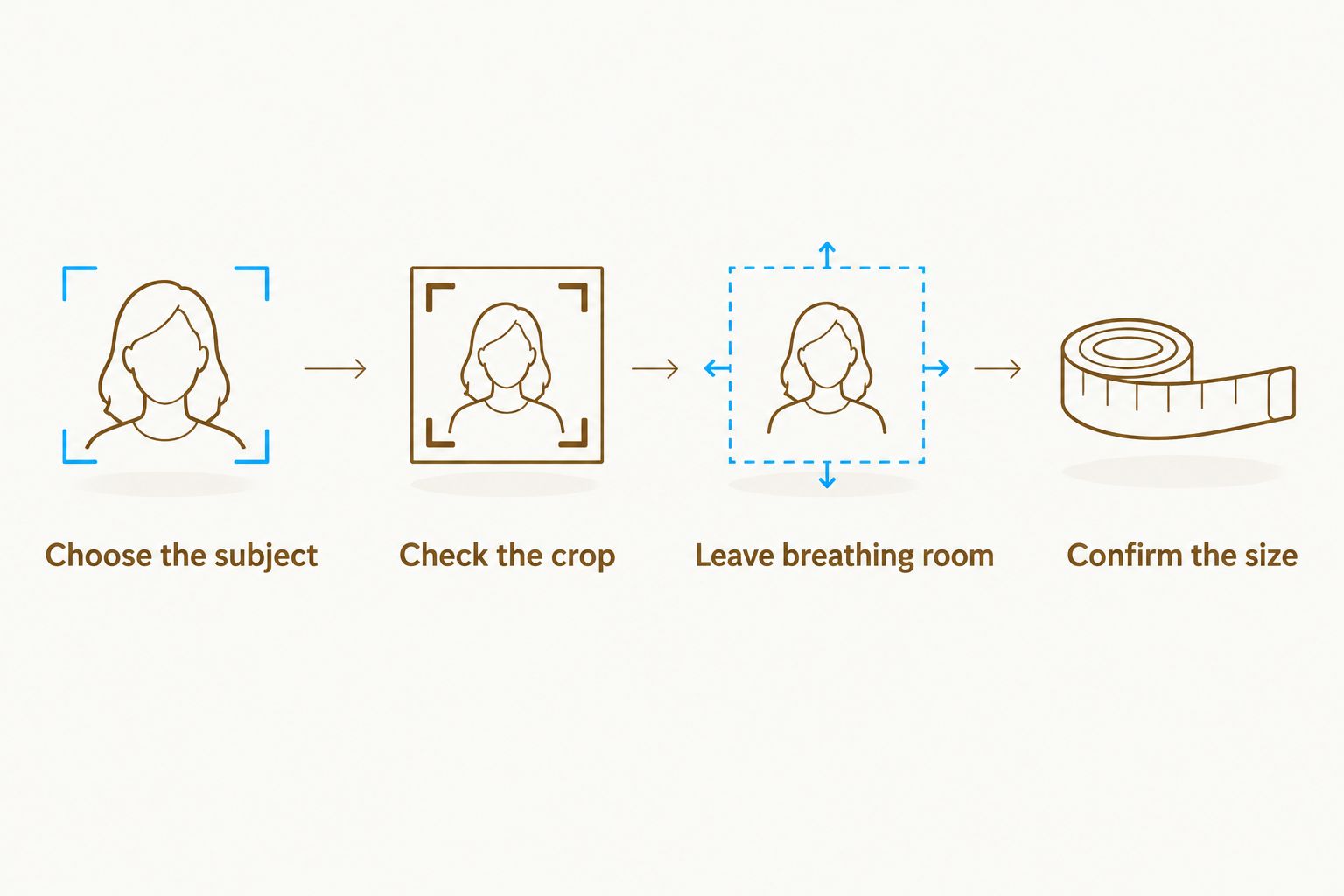
Use this sequence after choosing your preferred fabric. A suitable surface cannot fix a crop that removes someone's head or leaves the main subject too small.
Start with the person, pet, or place the recipient will recognize immediately. Use the original image file when possible, and inspect it at a larger size rather than judging it only from a small phone thumbnail.
Preview the intended pillow shape before adding decorations. A square crop and a rectangular crop preserve different parts of the same photograph, especially when people stand near the edges.
Keep important faces and lettering away from seams and outer edges. Do not position a precious detail exactly where the cover curves around the insert.
Measure the intended space. For scale planning, mark out squares measuring 12 x 12 inches, 16 x 16 inches, and 18 x 18 inches on paper; these are comparison examples, not stated PersonalThrows product sizes.
A larger outline does not automatically make a better gift. Choose the footprint that fits the recipient's chair or sofa, then confirm the actual cover dimensions and insert requirements on the selected product.
For your 2026 order, read the description as a checklist of separate parts. A beautiful front photograph does not answer questions about the back, closure, filling, or cleaning.
If a detail determines your choice, ask before ordering. PersonalThrows provides US-based phone support, which gives you a way to clarify product questions without guessing from a photograph.
The 2026 ranking prioritizes an even surface for recognizable photo detail, then separates the alternatives by their strongest use: cuddling, structure, woven texture, or sheen. It is a fabric-selection guide, not a laboratory test or a product-by-product durability comparison.
The lower-ranked fabrics are not automatically poorer choices. Choose the surface that matches how the recipient will use the pillow.
Choose smooth polyester if you are undecided and the photograph is the main reason for the gift. It is the clearest default for an image-first design without a pronounced pile.
Choose short-pile microfleece for softness, cotton canvas for structure, a linen blend for woven character, or velvet for sheen. Keep the photograph simple enough that the chosen texture supports the memory instead of distracting from it.
What's the best fabric for a custom photo pillow?
Smooth polyester is the best overall choice when clear facial detail is your priority. Check that the actual cover has an even surface, because polyester alone does not describe its texture or construction.
Is microfleece better than smooth polyester for a photo pillow?
Short-pile microfleece is better for a soft, cuddly feel; smooth polyester is better for an image-first surface. Choose according to whether touch or photo detail matters more to the recipient.
Does cotton canvas work for a personalized photo pillow?
Cotton canvas works for a structured decorative photo pillow. Its visible weave becomes part of the image, so it is less suited to a design built around tiny details.
Should I choose velvet for a family photo pillow?
Choose velvet when you want decorative sheen rather than a consistently even-looking photograph. Its directional pile changes appearance with brushing and light, so a simple portrait is a better match than a crowded collage.
Can I wash a custom photo pillow in the washing machine?
Machine-wash a custom photo pillow only when its specific care instructions permit it. Check the printed cover and insert separately, and do not substitute washing advice from a different product.
What size should I choose for a photo pillow gift?
Choose a size that fits the recipient's intended chair, sofa, or display space. Compare paper outlines before ordering, then confirm the actual cover dimensions and whether an insert is included.
How do I prepare a photo for a personalized pillow?
Use the original image file, preview the crop, and keep important faces away from the outer edges. Inspect the photograph at a larger size before committing to the design.
Judge the design as a pillow, not just as a flat picture. Wrap your paper layout around an existing cushion to see which details disappear toward the sides. Move a cherished face inward before ordering rather than relying on the fabric choice to solve a placement problem.

